Eating healthy sounds simple until you have to plan the meals, buy the ingredients, prepare everything, and clean the kitchen afterward. For people with demanding schedules, healthy meal delivery services and meal kits can make the process much easier.
But these two options are not the same.
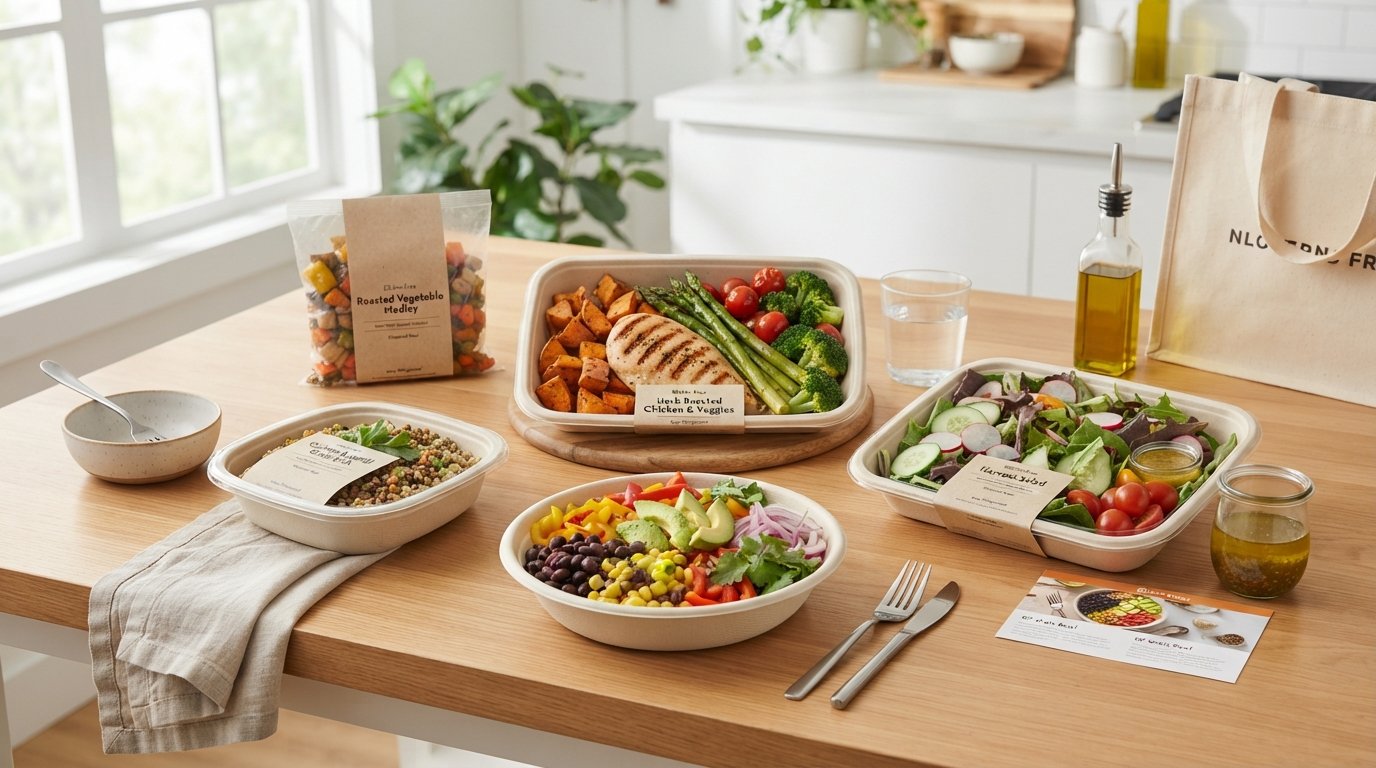
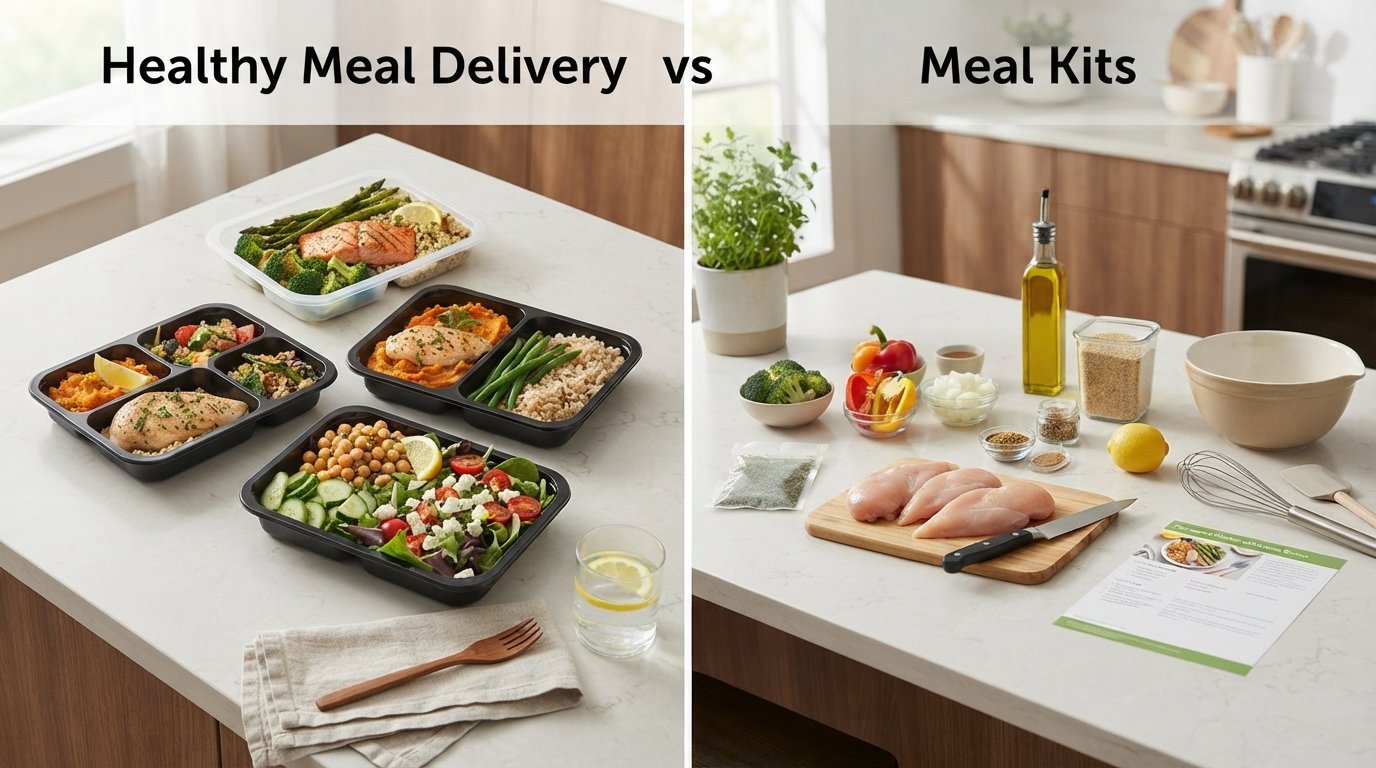
Healthy meal delivery services typically send fully prepared meals that only need to be heated. Meal kits send pre-portioned ingredients and recipes that you cook yourself.
So, which is better?
The answer depends on how much time you have, how much you enjoy cooking, your dietary goals, your budget, and how much control you want over your meals.
This guide compares healthy meal delivery vs meal kits across cost, convenience, nutrition, customization, cooking time, portion control, and overall value.
Healthy Meal Delivery vs Meal Kits at a Glance
| Feature | Healthy Meal Delivery | Meal Kits |
|---|---|---|
| Preparation | Usually heat and eat | Cook at home |
| Convenience | Very high | Moderate |
| Cooking required | Little or none | Yes |
| Time required | Usually 2 to 10 minutes | Often 20 to 45 minutes |
| Ingredient control | Lower | Higher |
| Portion control | Usually built in | Depends on recipe |
| Meal variety | Varies by service | Usually extensive |
| Grocery shopping | Minimal | Minimal |
| Cooking experience | Not required | Helpful |
| Best for | Busy people | People who enjoy cooking |
| Typical cost | Often higher per serving | Often lower per serving |
Neither option is automatically healthier. The nutritional quality depends on the specific company, ingredients, recipes, portion sizes, and meals you choose.
What Is a Healthy Meal Delivery Service?
A healthy meal delivery service sends prepared meals directly to your home. Most meals arrive refrigerated or frozen and require little preparation.
You generally:
- Receive the meals.
- Store them according to the company’s instructions.
- Heat the meal.
- Eat.
Some services focus specifically on health-oriented diets, while others offer menus that can be filtered by nutritional preferences.
Depending on the company, you may find:
- High-protein meals
- Low-calorie meals
- Vegetarian meals
- Vegan meals
- Gluten-free meals
- Low-carb meals
- Heart-conscious options
- Portion-controlled meals
This format is particularly useful for people who want healthy food without spending much time in the kitchen.
What Is a Meal Kit?
A meal kit provides the ingredients and instructions needed to prepare a meal yourself.
A typical box may contain:
- Vegetables
- Meat, poultry, seafood, or plant-based proteins
- Grains or other carbohydrates
- Sauces
- Herbs and seasonings
- Pre-portioned ingredients
- Step-by-step recipes
Instead of simply heating the food, you cook it yourself.
This gives you greater control over cooking methods, ingredients, seasoning, and portion sizes.
Healthy Meal Delivery vs Meal Kits: Convenience
If convenience is your primary concern, prepared meal delivery has the clear advantage.
A prepared meal can often go from refrigerator to table in only a few minutes.
Meal kits still save time because you do not need to plan the recipe or shop for every ingredient, but you still need to:
- Read the recipe
- Prepare ingredients
- Cook the food
- Clean cookware
- Wash dishes
For someone who works long hours or has a busy family schedule, those additional steps can matter.
Winner for Convenience: Healthy Meal Delivery
Choose prepared meals if your biggest problem is lack of time.
Which Is Healthier?
This question is more complicated.
Neither meal delivery nor meal kits are automatically healthy.
A prepared meal can be nutritionally balanced, but it can also contain substantial amounts of sodium, saturated fat, or added sugars depending on the recipe.
A meal kit can provide fresh vegetables, lean protein, and whole grains, but the nutritional quality depends on the recipe and how you prepare it.
When comparing meals, examine:
- Calories
- Protein
- Fiber
- Sodium
- Added sugar
- Saturated fat
- Vegetable content
- Whole grains
- Portion size
Do not judge a meal simply because its packaging says “healthy.”
Winner for Nutritional Control: Meal Kits
Meal kits generally give you more control over ingredients and preparation. However, a high-quality prepared meal service can still provide nutritionally balanced meals.
Meal Delivery vs Meal Kits for Weight Loss
Both options can support weight management.
The important factors are:
- Total calorie intake
- Portion size
- Protein intake
- Fiber
- Food quality
- Consistency
- Overall eating pattern
Prepared meals can make portion control easier because the serving size is predetermined.
Meal kits can also support weight management, particularly when you select balanced recipes and control the amount of oil, sauces, cheese, and other calorie-dense ingredients you add during cooking.
The bigger advantage of meal delivery is consistency. You know exactly what meal you are eating and, in many cases, have access to its nutritional information before ordering.
The bigger advantage of meal kits is control.
Best for Convenient Portion Control: Healthy Meal Delivery
Best for Hands-On Control: Meal Kits
Which Is More Affordable?
Meal kits are often less expensive per serving than fully prepared meals, but the exact price depends on the company, order size, delivery fees, promotions, and menu selections.
When calculating the real cost, include:
- Price per serving
- Delivery charges
- Subscription fees
- Minimum order requirements
- Taxes
- Promotional pricing
- Regular renewal pricing
Prepared meals can cost more because you are paying for additional labor, cooking, packaging, and convenience.
However, price per serving is not the whole story.
Consider how much you would normally spend on:
- Groceries
- Restaurant meals
- Takeout
- Food waste
- Time spent shopping
- Time spent cooking
If meal delivery replaces several expensive takeout meals each week, the higher per-meal price may still make financial sense.
Winner for Lower Per-Meal Cost: Meal Kits
Meal Kits vs Prepared Meals for Busy Professionals
If you work long hours, commute frequently, or have an unpredictable schedule, prepared meal delivery is usually more practical.
You do not need to decide what to cook after a tiring day.
The meal is already prepared, portioned, and ready to heat.
Meal kits are better when you have enough time to cook and actually enjoy the process.
A 30-minute meal may not sound like much, but when you add preparation, cooking, and cleanup, the total time can be considerably longer.
Winner for Busy Schedules: Healthy Meal Delivery
Meal Kits vs Meal Delivery for Families
Families have different priorities.
Prepared meals can make weekday dinners easier, especially when parents have demanding schedules.
However, meal kits may be more useful for families that want to eat together and involve children in cooking.
Meal kits can also make it easier to customize a meal. One family member can use more vegetables, another can reduce the sauce, and another can adjust the seasoning.
The downside is that cooking larger portions takes more time.
Best for Convenience: Prepared Meal Delivery
Best for Family Cooking: Meal Kits
Which Gives You More Control Over Ingredients?
Meal kits win this category.
When you cook the food yourself, you control:
- Cooking oil
- Salt
- Seasoning
- Sauce quantity
- Portion size
- Cooking method
- Ingredient substitutions
For example, if a recipe includes a high-sodium sauce, you can reduce the amount or replace it with an alternative.
With prepared meals, you have less control because the food has already been cooked.
You can still choose meals based on their ingredient and nutrition labels, but you cannot completely control how much of each ingredient was used.
Which Has Better Portion Control?
Prepared meal services generally have an advantage because portions are predetermined.
This can be useful if you are trying to maintain a consistent calorie intake or avoid oversized portions.
Meal kits can produce larger or smaller servings depending on the recipe and how you divide the food.
If portion control is important to you, look for services that clearly display:
- Calories per serving
- Serving size
- Protein
- Carbohydrates
- Fat
- Fiber
- Sodium
Do not assume that a meal labeled “healthy” automatically contains an appropriate portion.
Meal Variety
Meal kits often provide a wide range of recipes each week.
You may find:
- Mexican-inspired dishes
- Mediterranean meals
- Asian-inspired recipes
- Pasta
- Grain bowls
- Seafood
- Chicken
- Vegetarian meals
- Vegan recipes
Prepared meal services can also offer substantial variety, but some menus may become repetitive if you order frequently.
Before subscribing, examine several weeks of menus rather than looking at a single week’s selection.
A service may look impressive initially but become boring after a month.
Meal Delivery vs Meal Kits for Dietary Restrictions
If you have specific dietary requirements, read the ingredient information carefully.
Depending on the service, you may find options for:
- Gluten-free diets
- Vegetarian diets
- Vegan diets
- Low-carb eating
- High-protein diets
- Lower-calorie diets
- Dairy-free diets
- Other dietary preferences
However, a dietary filter does not necessarily mean that a service is suitable for a medically required diet.
If you have celiac disease, a severe food allergy, or another condition requiring strict avoidance of an ingredient, investigate the company’s allergen and cross-contact policies.
Do not rely solely on a menu label.
Cooking Experience
This is an underrated factor.
If you enjoy cooking, meal kits can be a useful middle ground between grocery shopping and ordering takeout.
You get:
- A recipe
- Pre-portioned ingredients
- Cooking instructions
- Less grocery shopping
- Less meal planning
You still get the satisfaction of making the meal yourself.
If you dislike cooking, however, a meal kit can become another chore.
There is no point paying for ingredients that will sit in your refrigerator because you are too busy to prepare them.
Best for Cooking Enthusiasts: Meal Kits
Best for People Who Dislike Cooking: Healthy Meal Delivery
Food Waste
Meal kits can reduce food waste because ingredients are generally portioned for a specific recipe.
However, some ingredients may still be left over, particularly pantry items or larger packages.
Prepared meal delivery can reduce food waste even further because meals are already portioned.
On the other hand, prepared meals often use more packaging because individual meals need to be packaged, refrigerated, and transported.
So the environmental impact is not simply about food waste.
You should also consider:
- Packaging materials
- Refrigeration
- Transportation
- Ingredient sourcing
- Food waste
Which Is Better for Learning to Cook?
Meal kits are the obvious choice.
They can teach you:
- Knife skills
- Cooking techniques
- Ingredient combinations
- Portioning
- Seasoning
- Recipe planning
For someone who wants to become more comfortable in the kitchen, meal kits can provide structured practice without requiring a trip to the grocery store for every ingredient.
Prepared meals do not provide the same educational benefit.
Which Is Better for Long-Term Healthy Eating?
Neither option should replace your ability to make basic food decisions.
Meal delivery can make healthy eating easier, but you should still understand nutrition and learn how to prepare simple meals independently.
Meal kits can help develop cooking skills that remain useful after the subscription ends.
For long-term lifestyle change, the strongest approach may be a combination of both.
For example, you might use prepared meals on extremely busy weekdays and meal kits or home-cooked meals when you have more time.
Healthy Meal Delivery vs Meal Kits: Pros and Cons
Healthy Meal Delivery
Pros
- Extremely convenient
- Minimal preparation
- Predictable portions
- Easy access to nutritional information
- Useful for busy schedules
- Less cooking and cleanup
Cons
- Often more expensive
- Less control over ingredients
- More packaging
- Limited ability to customize meals
- Some menus can become repetitive
Meal Kits
Pros
- More control over ingredients
- Fresh ingredients
- Cooking experience
- Wide recipe variety
- Less grocery shopping
- Often lower cost per serving
Cons
- Requires cooking
- Requires cleanup
- Takes more time
- Portions may require more attention
- Still requires refrigerator space and meal planning
How to Choose Between Meal Delivery and Meal Kits
Ask yourself five questions.
1. How much time do I have?
If you have almost no time, choose prepared meals.
2. Do I enjoy cooking?
If yes, meal kits may provide more value.
3. What is my budget?
If keeping costs down is important, compare meal kits with prepared services and calculate the full weekly cost.
4. Do I need strict portion control?
Prepared meals can make this easier.
5. Do I have specific dietary requirements?
Choose a service that clearly accommodates your needs and provides transparent ingredient and allergen information.
Is Healthy Meal Delivery Worth the Money?
Healthy meal delivery can be worth the cost if convenience is your priority.
It can reduce the temptation to order fast food when you are tired and make it easier to maintain a consistent meal schedule.
However, you are paying a premium for convenience.
If you have enough time to cook and enjoy preparing food, a meal kit or regular grocery shopping may provide better value.
Are Meal Kits Worth the Money?
Meal kits can be worthwhile for people who want to cook more often but dislike meal planning and grocery shopping.
They provide structure without completely removing the cooking process.
The main question is whether you will actually prepare the meals.
If you consistently cook the meals, they can be useful. If they sit untouched in your refrigerator, they are an expensive waste.
Frequently Asked Questions
Is healthy meal delivery better than meal kits?
Neither is universally better. Prepared meal delivery is better for convenience and portion control, while meal kits are better for cooking, ingredient control, and learning new recipes.
Are meal delivery services actually healthy?
Some are, but not all. Review calories, protein, fiber, sodium, added sugar, saturated fat, ingredients, and portion sizes rather than relying on marketing claims.
Are meal kits healthier than takeout?
They can be. Meal kits give you greater control over ingredients and cooking methods, which can make it easier to prepare balanced meals at home.
Are prepared meals good for weight loss?
They can support weight management when portions and overall calorie intake are appropriate for your needs. A prepared meal alone does not guarantee weight loss.
Which is cheaper, meal kits or prepared meals?
Meal kits are often cheaper per serving, while prepared meals generally cost more because you are paying for cooking and convenience.
Can meal kits help me learn to cook?
Yes. Meal kits provide recipes, measured ingredients, and cooking instructions, making them useful for people who want to develop basic cooking skills.
Can I use both meal delivery and meal kits?
Yes. Combining the two can be a practical strategy. Use prepared meals when time is limited and meal kits when you have time to cook.
Final Verdict: Healthy Meal Delivery vs Meal Kits
So, which is better?
Choose healthy meal delivery if you value convenience, have limited time, want predictable portions, or simply do not want to cook.
Choose meal kits if you enjoy cooking, want greater control over ingredients, want to learn new recipes, and prefer preparing meals yourself.
There is no universal winner.
The better option is the one you will actually use consistently.
If your biggest obstacle to healthy eating is time, prepared meal delivery is probably the smarter choice. If your biggest obstacle is meal planning and grocery shopping, a meal kit may solve the problem without taking cooking away from you.
And if your schedule changes from week to week, there is nothing wrong with using both.
Healthy eating does not require perfection. It requires a system that fits your actual life, not the life you wish you had.